
Contra Costa Previous Residents Sources
Contra Costa County was created in 1850, with Martinez as the county seat. That makes the county deed, court, tax, and probate series the backbone for a long address history. The sources below do not all identify the same kind of person. The Recorder follows parties to an instrument. The Assessor follows an assessment account. A directory or census places people at an address for a time. Sanborn maps preserve the building and street setting without naming occupants.
| Source | Years It Covers | Where Held | What It Shows |
|---|---|---|---|
| Recorder grantor and grantee indexes | County era from 1850; remote cutoff must be confirmed | Clerk-Recorder online route and Martinez counter | Parties, instrument, date, legal description |
| Historical Assessor books | 1850-1910, with possible gaps | Contra Costa County Historical Society | Assessed owner or taxpayer, land, improvements, value |
| Richmond city directories | 1903-1964/65 runs, with gaps | Richmond Museum and selected catalogs | Names, addresses, household clues and street entries |
| County and west-county telephone books | 1903-2015/16 inventory, discontinuous | Richmond Museum and Library of Congress items | Subscribers and addresses in a stated edition |
| Federal census | 1850-1950 public; 1960 opens in 2032 | NARA and library databases | Household composition, relationships, age and birthplace |
| Newspapers and obituaries | Local runs vary by title and year | County Library and CCCHS | Moves, deaths, notices, heirs and address mentions |
| CCCHS court and probate files | 1850s into the mid-twentieth century | History Center and Superior Court | Decedents, heirs, estate property and proceedings |
| Richmond Sanborn maps | 1903, 1905, 1909, 1916; El Cerrito 1926 | Library of Congress and related digital items | Footprints, uses, street numbers and neighborhood form |
| GIS and assessment maps | Current CCMap; historic maps through the local collections | CCMap, Assessor and CCCHS | APN, parcel shape, subdivision and land identity |
| Building and engineering records | Current and historical coverage varies | City department or county development office | Permit applicants, work, dates and disclosed plans |
Start with the present parcel when the goal is a complete ownership trail. Start with a directory, census, or newspaper when the question is who occupied the address in a particular era. A permit may explain a change to the building, while probate or an obituary may explain why a name disappears. The table is a route map, not proof that every year or every household survives.
The recorded-document search view at the Contra Costa Clerk-Recorder ordering site is a useful starting image for the instrument side of the trail.
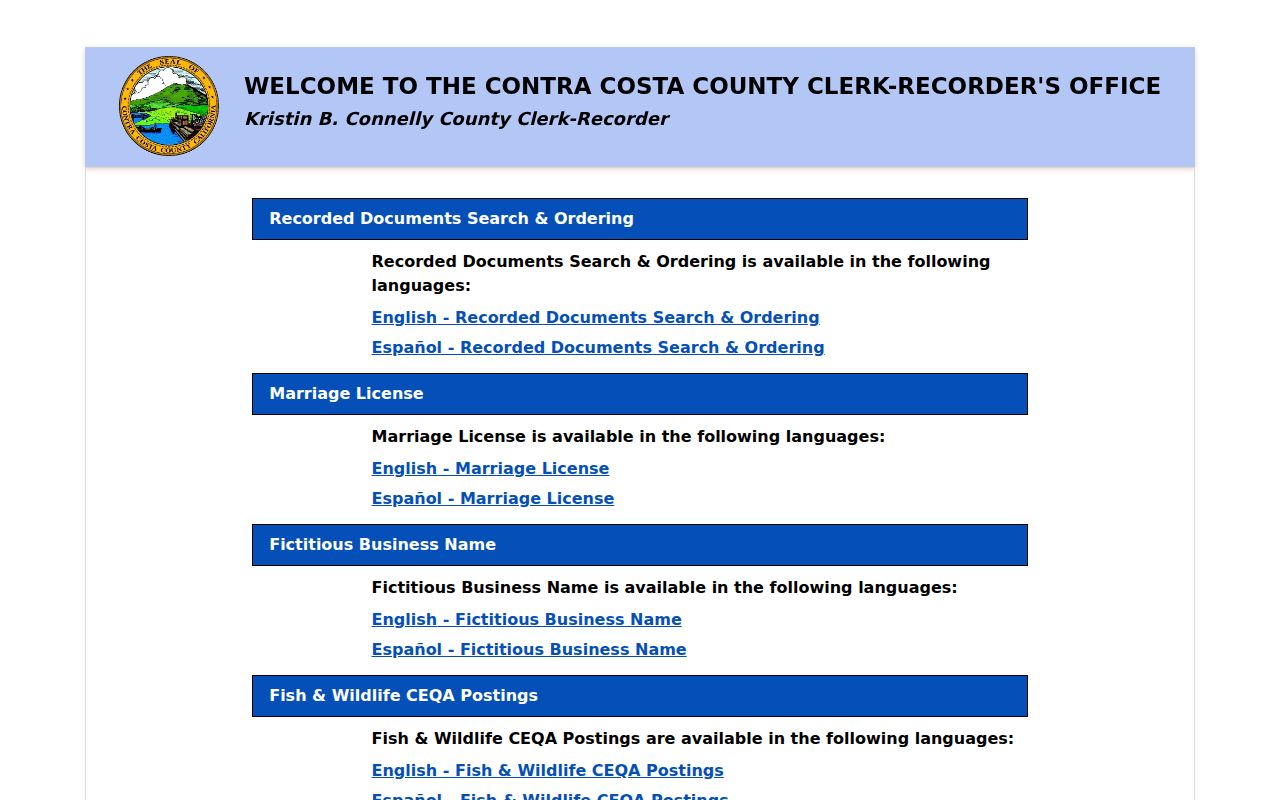
The image represents an index and ordering route. The actual deed or map, when needed, must be checked with the custodian and read against its legal description.
Contra Costa Previous Residents Deed Chain
The backward trail begins with the current parcel, not with an unverified name. Resolve the address in CCMap External, record the APN and situs spelling, and ask the Contra Costa Assessor for the public ownership information available through its web or counter channel. Then use the Recorder's name index. The index is arranged around principal parties and recorded instruments, not around a complete street roster.
- Write down the APN, situs, subdivision or lot reference, and any legal description shown with the current parcel.
- Search the current assessed owner's name as grantee, using spelling variants and the approximate acquisition period.
- Read the instrument number, recording date, document type, grantor, and legal description. Do not treat a deed of trust as a conveyance.
- Search the grantor as an earlier grantee, then match the legal description, APN lineage, map, and dates before accepting the link.
- Repeat until the online route ends, then carry the same names and years to the free public indexes and books at the Martinez counter.
The county record trail begins with county formation in 1850, but the research did not establish a universal first online index or image year. An electronic result may therefore end before the land record ends. The instrument itself is the evidence; a name-only match is not.
- Grantor
- The party transferring an interest in the recorded instrument.
- Grantee
- The party receiving the interest. Searching the prior grantor as a grantee is the backward step.
- Chain of title
- The linked sequence of recorded transfers that explains how the same land moved from one owner to another.
- Legal description
- The lot, map, subdivision, or metes-and-bounds language that identifies the land when a street address changes.
Note: A deed follows an ownership event; a directory or census is needed to test dated occupancy.
Martinez Counter for Previous Residents
When the online index stops, the Clerk-Recorder counter at 555 Escobar Street in Martinez is the documented fallback. The official brochure says viewing recorded documents and indexes at the office is free. Bring at least one principal-party name and an approximate recording year. The public counter can bridge older books, film, maps, and instrument images that a current vendor interface does not expose.
Recording staff can be reached at 925-335-7900. The research lists Monday through Friday, 8 a.m. to 4 p.m. for the Recorder counter, but hours and copy rules should be checked before travel. The recording and research page is the better route for current instructions, while the published fee schedule at the Recorder fee PDF should be checked before ordering copies or certification.
Write down the exact party spelling, role, document type, year, instrument number or book and page, and map reference. A counter search is most useful when it continues a known APN and legal description rather than beginning with a broad surname. Staff cannot choose legal forms or give legal advice, so the result still needs careful reading.
If a county-era series has moved beyond the Recorder's counter, search the California State Archives county and city records guide for the relevant local-government material. The published guide lists Contra Costa fiscal records from 1873-1908 and explains that some county microfilm may be available through FamilySearch. It does not mean the State Archives holds every deed or vital volume.
The Contra Costa Historical Society image at its searchable resources collection shows the kind of local index layer that can help when a deed trail meets probate, obituary, map, or tax material.
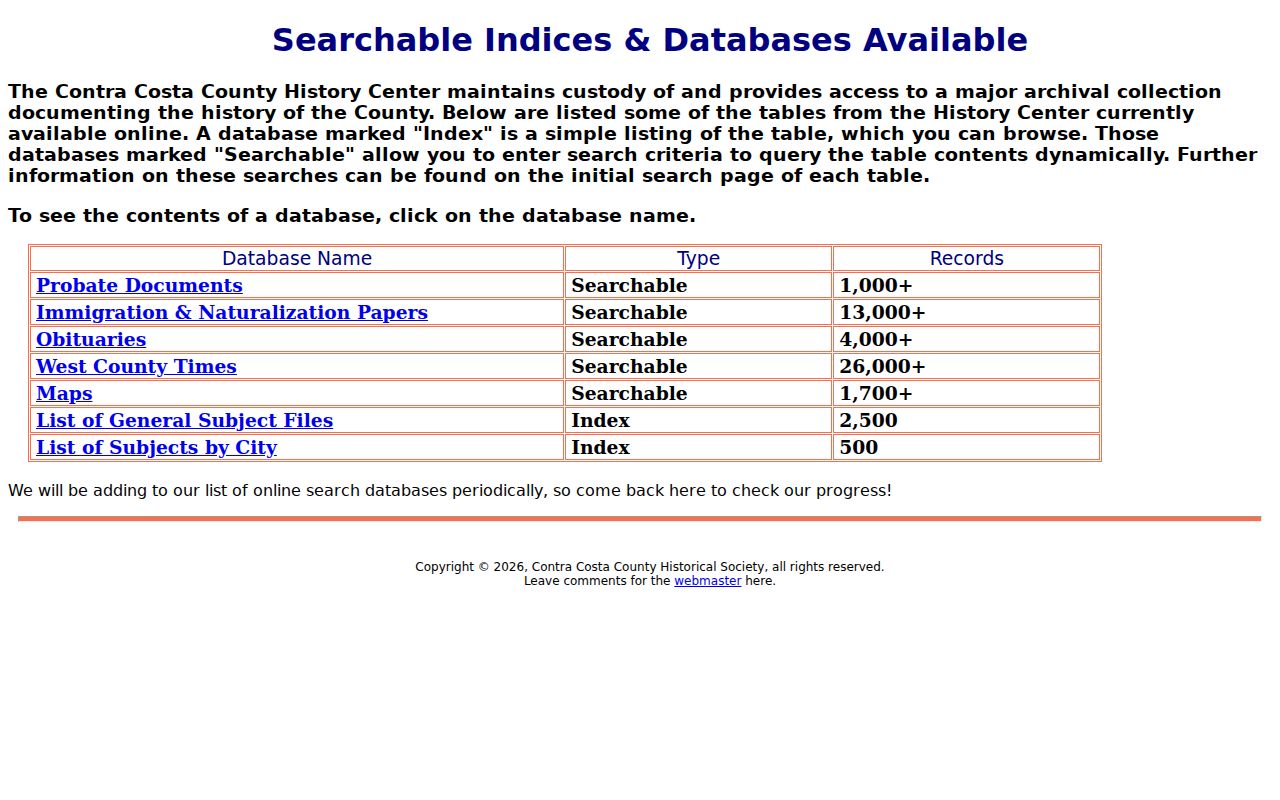
Local indexes can point to an item identifier, but the source record remains with the holding office or collection. Record the repository and request path along with every name.
Note: No dated universal online cutoff was verified, so the Martinez counter is a necessary fallback rather than a last-resort assumption.
Legal Descriptions Preserve Previous Residents
Street addresses are convenient, but they are weak historical keys. Contra Costa records may use a rancho boundary, survey, township and range, metes and bounds, subdivision, lot and block, or map-book reference. A road may be renamed, a number may be changed, or a place may be filed under an older community label. The deed's legal description and the APN lineage keep the land connected when the address text does not.
Preserve the original spelling in the source note. Historic searches may need Rust, Stege, Pullman, West Pittsburg, Shore Acres, or another older place label alongside the current municipality. Compare the old description with subdivision maps, Annotated Assessor Parcel Books, Sanborn sheets, and the current CCMap outline. A map reference that appears unfamiliar can be more valuable than a guessed modern street name.
For an address that crosses a parcel split or merger, log each successor APN and the date or instrument that connects it. Do not silently treat a new parcel number as a new household. The land identity, the ownership event, and the people associated with the place are separate parts of the previous residents record.
Contra Costa Past Households in Directories
Reverse and criss-cross directories add the household layer that deeds do not. The Richmond Museum finding guide documents local runs from the early twentieth century through the mid-1960s, plus telephone books with later gaps. Search the street section for the address, copy the entry exactly, and check the page's abbreviation key. A directory can show a named subscriber or occupant at a stated time, but it may omit people who were not listed, newly arrived, or outside the publication's territory.
The county market is fragmented. Richmond, Martinez, Antioch, Pittsburg, west-county telephone areas, and later community editions do not form one uninterrupted county book. The Contra Costa city directory collections page owns the full publisher and shelf description. For previous residents, the useful act is narrower: select the correct year, community, street section, and adjacent editions, then attach each entry to the parcel record.
Use nearby years to test a disappearance. A changed street label, a new subscriber, a newspaper notice, or a different household name can mark a move or a change in publication coverage. It cannot by itself prove a sale, death, or continuous residence.
Census Anchors for Contra Costa Previous Residents
The federal census supplies a useful household checkpoint between deed events and directory editions. Public population schedules run through 1950 under the 72-year release rule. The National Archives states that 1950 is the newest public population census in this research set, while 1960 remains closed until 2032. Census entries can show household relationships, age, birthplace, and other fields that a street listing may leave out.
Pair the directory observations with the closest census year, such as 1910, 1920, 1930, 1940, or 1950. The census address may be recorded by enumeration district, route, or a nearby description rather than the exact modern format. Use names, household members, parcel history, and neighborhood order together. A census household is a dated snapshot, not proof that everyone stayed at the address for the whole decade.
The federal research view at the National Archives census guidance illustrates the release rule that controls access to the newest schedules.
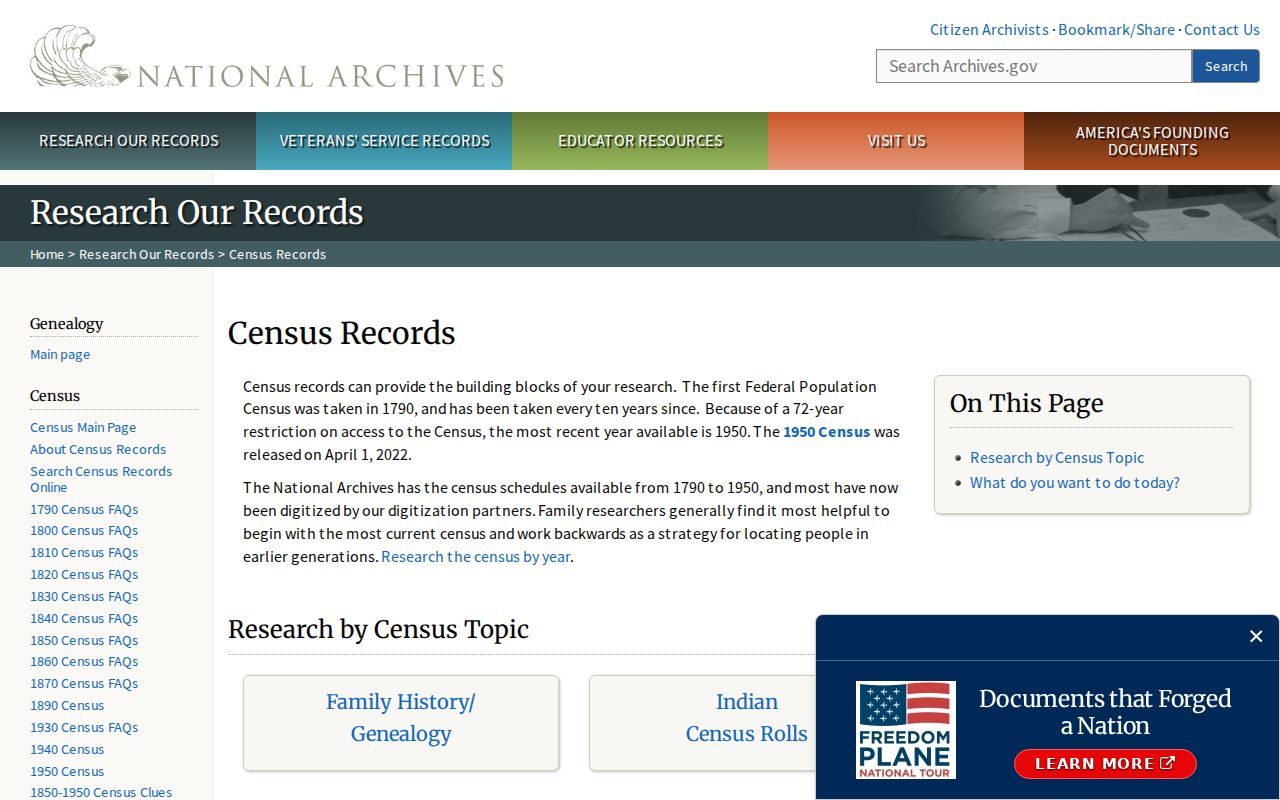
Use the census image as a time anchor, then return to deeds, directories, newspapers, and maps for the years between schedules. The best result is a dated sequence, not a single isolated match.
Note: A census schedule places a household at an enumeration date, not automatically across the full decade.
Contra Costa Sanborn Maps Date Previous Residents
Sanborn fire-insurance maps do not name previous residents, but they can explain why an address is hard to follow. The research identifies Richmond sheets from March 1903, October 1905, May 1909, and June 1916, plus El Cerrito sheets from July 1926. They show building footprints, street numbers, construction materials, uses, outbuildings, and neighborhood form. That detail can distinguish a changed number from a moved or replaced structure.
The Library of Congress Richmond 1909 item is a useful map entry point. Compare the same block across available years. If a structure remains in the same footprint while the address text shifts, bridge the trail with the legal description, subdivision map, directory street guide, and APN. If the footprint changes, permits or newspapers may explain the new construction.
The 1916 map's inclusion of Winehaven, Pullman, and Stege preserves place labels that can look like separate destinations in a name search. A place-name change is evidence about geography, not proof that a household moved.
Obituaries and Probate for Contra Costa Residents
Obituaries and probate can close a previous resident trail when a directory entry disappears. The County Library holds local newspapers in online, film, and paper runs that vary by title. The research notes Contra Costa Times obituary access from June 1995 forward through the library, with earlier material on microfilm, while CCCHS maintains a searchable obituary and biography clipping layer.
Probate belongs to the Superior Court, not the Clerk-Recorder. A public register can identify a decedent, petitioner, personal representative, hearing, or estate event. Underlying probate documents may require a Court Records request. A recorded affidavit of death, trustee's deed, or decree of distribution can connect the proceeding to an APN, but each instrument should be read on its own terms.
Use a death record or obituary as a date clue, probate as the estate trail, and the Recorder as the land trail. A notice may name relatives or an address without proving that every named person lived there. Keep the record role visible in the research log.
Contra Costa Previous Residents House History
The Contra Costa County Historical Society History Center at 724 Escobar Street in Martinez is the local house-history service even though its collection is broader than houses. Its holdings include directories, early vital and cemetery indexes, city and town files, obituary and biography clippings, more than 1,700 maps dated from 1775 into the 1990s, yearly tax-Assessor books stated as 1850-1910, court files, probate material, and naturalization records. Its free PACT computer searches digitized photographs, newspapers, maps, county histories, and the center database.
Posted hours are Tuesday through Thursday, 9 a.m. to 4 p.m., and the first and third Saturdays, 10 a.m. to 2 p.m. The center lists 925-229-1042 and staff research at $20 per hour for members or $30 for nonmembers for personal use. Confirm hours, appointments, photography limits, reproduction charges, and the exact item location before travel. Large or delicate maps may need an appointment.
The Library of Congress guide at House History research shows the broader order of work: deeds, directories, maps, photographs, and plans. Contra Costa evidence comes from the Recorder, CCMap, Richmond Museum, Library, and CCCHS rather than from one national collection.
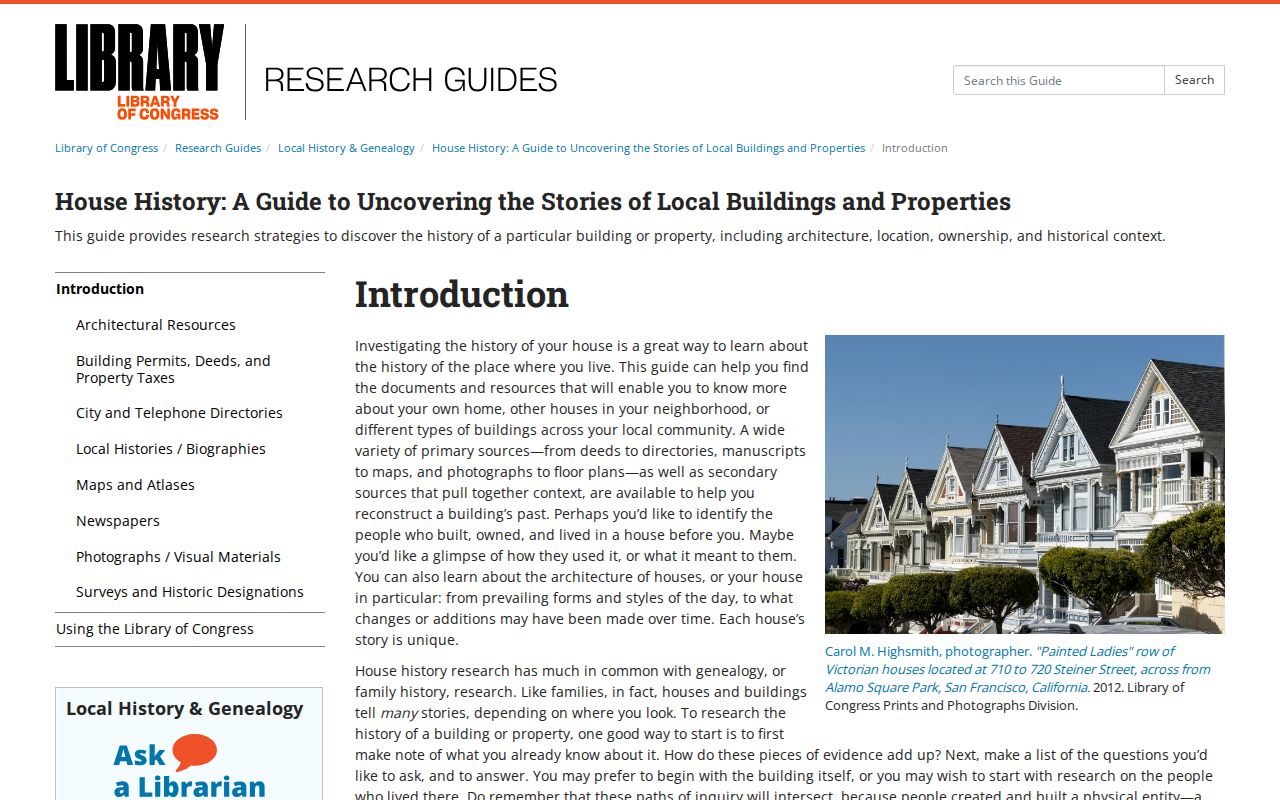
The house-history view is most useful when it sends the researcher back to a named local custodian. Record the repository, collection title, item date, and address language before moving to the next source.
Note: A house-history source is strongest when its address language, date, and repository are preserved in the research log.
Contra Costa Previous Residents and Occupancy
Ownership and occupancy are not the same record question. A deed proves that a named party took or transferred an interest. An Assessor record ties an assessment account to a parcel and may show a tax mailing address. A directory, census, obituary, or newspaper can place a person at an address for a dated moment. None of those sources alone proves a complete household or continuous presence.
Keep a simple evidence log with the source URL or repository, query, access date, exact spelling, record role, date, address type, and confidence. Mark whether an address is situs, tax mailing, business, postal, or historical. When two names match, compare parcel, spouse or family connection, dates, street sequence, case number, and document role. A shared surname or address is not enough.
Current street-by-street work can continue through the Contra Costa street directory, while the backward trail remains focused on one parcel and its past. If a source is closed, use the lawful fallback named by its custodian rather than trying to reconstruct protected information indirectly.
Lawful use. Previous-resident research in Contra Costa is appropriate for house history, family history, estate work, and personal curiosity. Do not use names, addresses, or records to stalk, harass, threaten, or harm a living person.